Shrishti Associates

Expert Vastu Consultant Mumbai | Vastu Shastra​

Description

Vastu Shastra is an ancient Indian system of architecture and spatial planning that considers the relationship between a built environment, directions, natural elements, and human well-being. It has traditionally been followed in the design of temples, homes, offices, and other structures.

Vastu principles consider factors such as direction, spatial arrangement, proportions, mathematical calculations, and the balance of the five natural elements. Traditional concepts such as Maana and Aayadi are also associated with Vastu planning.

Vastu Shastra is distinct from Feng Shui and has its own Indian architectural principles, traditions, and methodology.

The foundation of Vastu includes the Panch Maha Bhoot, or five elements:

Earth (Bhumi) • Water (Jal) • Fire (Agni) • Air (Vayu) • Space (Akash)

These elements are traditionally considered interconnected and are taken into consideration while planning and designing residential, commercial, and other spaces.

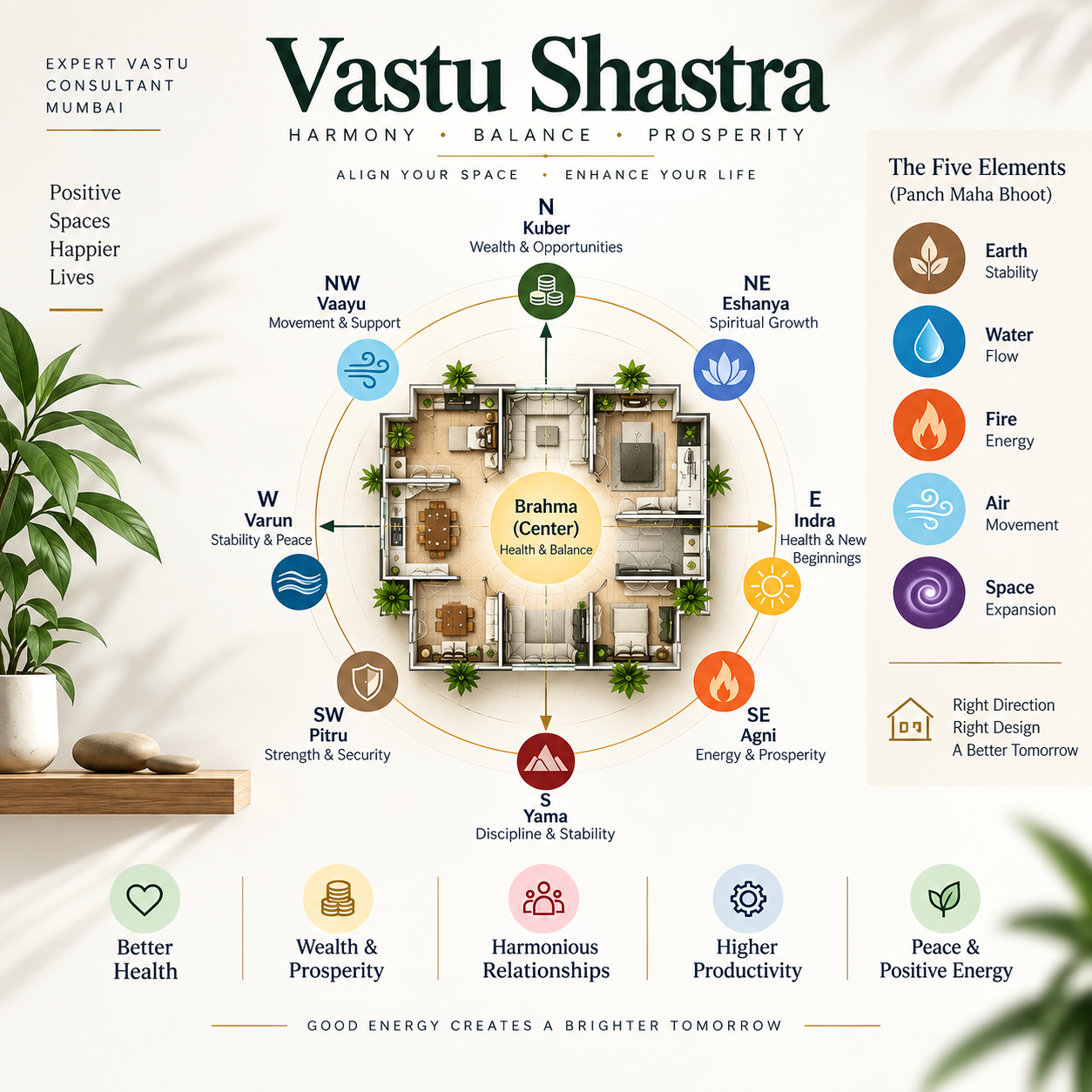
"Vastu brings together direction, space, elements and proportion to create a balanced environment for living and working."

The Nine Vastu Directions

Direction plays an important role in traditional Vastu planning. North and East are traditionally considered favorable directions for entrances and important openings.

North • Kuber
Ruled by Kuber, traditionally associated with wealth, prosperity and financial abundance.

East • Indra
Associated with Indra and the Sun, traditionally connected with light, visibility and new beginnings.

Southeast • Agni
Associated with Agni, representing fire, energy and transformation.

Northeast • Eshanya
Associated with Lord Shiva and traditionally considered a spiritually significant zone.

South • Yama
Associated with Yama, traditionally connected with discipline, stability and protection.

Southwest • Pitru
Associated with ancestors and heritage, representing history, strength and grounding.

West • Varun
Associated with Varun, the deity of water, traditionally connected with stability and physical well-being.

Center • Brahma
Associated with Brahma, the creator, representing the central space, balance and harmony.

Northwest • Vaayu
Associated with Vayu, representing wind, movement, communication and change.

Panch Maha Bhoot

The five fundamental elements form an important part of traditional Vastu principles.

Earth • Bhumi
Represents stability, grounding and strength.

Water • Jal
Represents flow, adaptability and purification.

Fire • Agni
Represents energy, transformation and vitality.

Air • Vayu
Represents movement, communication and circulation.

Space • Akash
Represents openness, expansion and connectivity.

Vastu Room Placement

Traditional Vastu guidelines also associate different activities and rooms with specific directions.

North
Treasury / Finance

Northeast
Prayer / Meditation Room

East
Bathroom

Southeast
Kitchen

South
Bedroom

Southwest
Armoury / Storage

West
Dining Room

Northwest
Cowshed / Utility Area

Choosing Wall Colors According to Vastu

Bedroom

Pink, light blue and light green are traditionally considered suitable choices for bedrooms.

For children's bedrooms, green is often preferred as it is associated with freshness, learning and a calming environment.

Living Room

Yellow, blue, green, tan and beige can create a warm, welcoming and pleasant atmosphere for family members and guests.

Bathroom

White, grey, pastel shades and combinations of white with black can create a clean and balanced appearance.

Kitchen

White, yellow, orange, rose pink, chocolate and red are traditionally recommended color options for kitchens.

Dining Room

Pink, green and blue can create a refreshing and comfortable atmosphere for family meals and entertaining.

Dark or excessive black-and-white combinations are traditionally avoided.

Impact of Colors

Color has a strong influence on the visual, emotional and psychological experience of a space. In interior design, selecting the right palette can influence the atmosphere, comfort and character of a room.

Red

Represents power, courage and energy. Because of its strong and stimulating character, it should be used carefully, particularly in bedrooms.

Orange

Associated with energy, enthusiasm, positivity and social interaction. Softer shades such as peach can provide a warmer and calmer alternative.

Green

Represents nature, freshness, harmony and renewal. It works particularly well in study areas, bedrooms and spaces intended to feel calm and refreshing.

Yellow

Associated with sunlight, optimism, wisdom and warmth. It can work well in spaces such as prayer rooms, although very bright yellow may be excessive in rooms receiving strong direct sunlight.

Purple

Associated with faith, respect and sophistication. Lighter purple tones can create a calm and elegant atmosphere, while excessive use may feel overpowering.

Blue

Represents calmness, relaxation and freshness. Light blue can work particularly well in bedrooms and meditation spaces.

White

Represents cleanliness, openness and simplicity. White reflects light and can make a room feel brighter and more spacious. It also works well when combined with other colors.

Pink

Associated with joy, warmth, happiness and affection. Soft pink can be suitable for bedrooms, particularly master bedrooms.

Black

Black can create a sophisticated look when used selectively, but excessive use may make a space feel darker or heavier. It is therefore better used as an accent rather than the dominant color.

Our Website 500+ VIP Customer